NOUVEAUX
CLIENTS
-20%
J'en profite

DÉVELOPPEZ
VOS COMPÉTENCES
FAITES GRANDIR
VOS TALENTS
Trouvez votre formation
Cultivez l'excellence,
transformez
vos projets
Formation inter / intra, certification, coaching, conférences, solutions sur mesure...
Orsys vous accompagne dans vos projets, vos talents et vos transformations.
AVEC ORSYS
Vivez l’expérience formation adaptée à vos besoins
Nous vous proposons un écosystème complet de solutions : inter entreprise, intra, sur mesure, séminaires, webinars, e-learning, coaching, accompagnement… En présentiel ou en classe à distance, pour réussir vos projets.

96,5%
Taux de satisfaction client

20 500
Sessions réalisées

5 000
Projets sur mesure réalisés

15 200
Entreprise Clientes
Données Groupe ORSYS 2025
DU besoin à l' action

J’ai besoin d’être
rapidement
opérationnel
Formation pratique
• Courte, application terrain, + de 60% de mises en situation
• Conçue, actualisée et animée par des experts
• En petit groupe pour favoriser le partage d’expérience

Je vise une formation adaptée à mon contexte
Formation sur mesure
• Expert choisi en fonction du secteur d’activité, de la localisation…
• Coconstruction de la solution pédagogique : formation en présentiel ou à distance, blended learning, projet e-learning sur mesure, webinar sur mesure…
• Un processus d’accompagnement en 5 étapes : cadrage, diagnostic et conseil, conception de la solution, mise en œuvre, mesure des résultats et suivi

Je souhaite valoriser
mes compétences
Formation certifiante
• Certifications officielles (Process Com, ITIL, Microsoft Azure, Scrum…) et titres RNCP reconnus par l’État
• Préparation optimale et passage des examens
• Formateurs labellisés par les éditeurs et validés par ORSYS
SESSIONS GARANTIES
Planifiez votre formation en toute sérénité
Notre sélection des prochaines semaines
Technologies numériques
Formation :
Data Science, les fondamentaux

23/06/2026 - Classe Virtuelle
Voir la session
Technologies numériques
Formation :
Gouvernance des données cybersécurité et conformité réglementaire

29/06/2026 - Classe Virtuelle
Voir la session
Dév perso
Formation :
Déléguer et responsabiliser, préparation à la certification Excellens®
22/06/2026 - Classe Virtuelle
Voir la session
Technologies numériques
Formation :
Spark Python, développer des applications pour le big data
17/06/2026 - Paris La Défense
Voir la session
Dév perso
Formation :
Lecture rapide : lire vite, comprendre et retenir l'essentiel
22/06/2026 - Paris La Défense
Voir la session
Technologies numériques
Formation :
Test Driven Development en Java
24/06/2026 - Classe Virtuelle
Voir la session
Dév perso
Formation :
Gérer son stress
25/06/2026 - Classe Virtuelle
Voir la session
Compétences métiers
Formation :
Chief Happiness Officer, les clés de la fonction
18/06/2026 - Classe Virtuelle
Voir la session
Technologies numériques
Formation :
Analyste SOC, le métier
25/06/2026 - Classe Virtuelle
Voir la session
Technologies numériques
Formation :
Estimation des charges et délais des projets informatiques
22/06/2026 - Classe Virtuelle
Voir la session
Compétences métiers
Formation :
Webmarketing : augmenter la visibilité de son site Web
22/06/2026 - Paris La Défense
Voir la session
Technologies numériques
Formation :
PostgreSQL, développement PL/pgSQL
22/06/2026 - Classe Virtuelle
Voir la session

Des centres proches de chez vous
+ de 40 sites en France et à l’international
ORSYS s’engage à :
• Être un acteur de l’écosystème régional
• Concevoir une solution adaptée à vos enjeux et connectée aux spécificités locales
• Réduire l’impact environnemental


PARIS
LYON
AIX-EN-PROVENCE
AMIENS
ANGERS
AVIGNON
BORDEAUX
BREST
CAEN
CLERMONT-FERRAND
DIJON
GRENOBLE
LE MANS
LILLE
LIMOGES
MARSEILLE
METZ
MONTPELLIER
MULHOUSE
NANCY
NANTES
NIORT
ORLÉANS
PAU
REIMS
RENNES
ROUEN
SAINT-ÉTIENNE
SOPHIA-ANTIPOLIS
STRASBOURG
TOULON
TOULOUSE
TOURS
VALENCE
BRUXELLES
ANVERS
GENÈVE
LUXEMBOURG
Nos dernières ACTUS
5
NOUVELLES ACTUS :
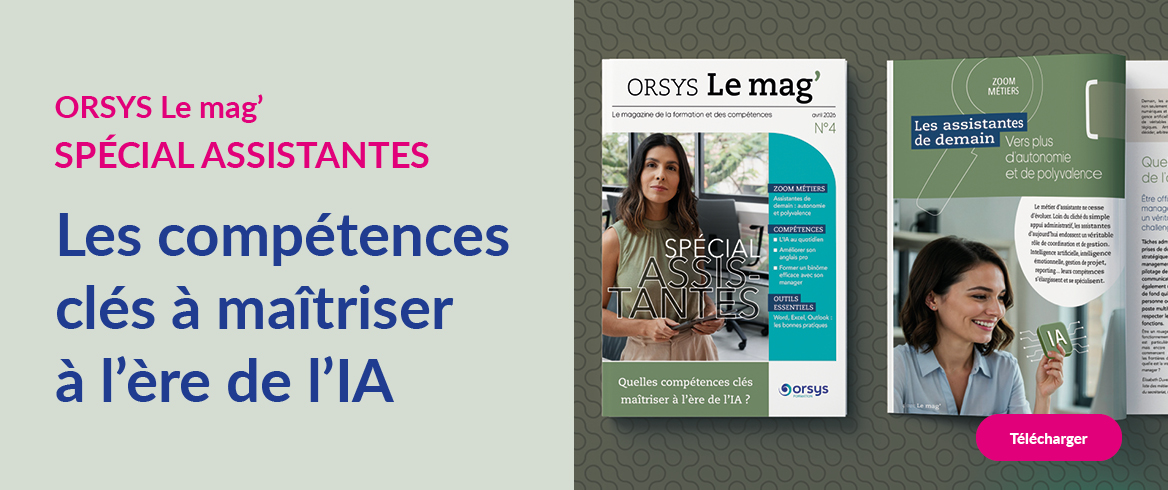


(In)formez-vous
ORSYS LE MAG'


50 ans
d’expertise
Créée en 1976, initialement pour répondre aux besoins de formation des informaticiens, ORSYS a su appliquer avec pertinence son approche innovante et sa vision de transmission du savoir opérationnel à tous les métiers de l’entreprise.
Cinquante années d'expertise et de croissance ont transformé sa démarche en un groupe fort :
6 filiales (France et international), +
40 centres,
450 collaborateurs, 3000 partenaires formateurs,
2600 formations faisant d’ORSYS, le partenaire stratégique des organisations et des individus dans leur montée en compétence et le maintien de leur performance.
En
2026, nous ne célébrons pas seulement un demi-siècle d'existence, mais bien notre mission et notre engagement constant à accompagner nos clients dans la construction et la mise en œuvre réussies de leurs projets de développement (des compétences).