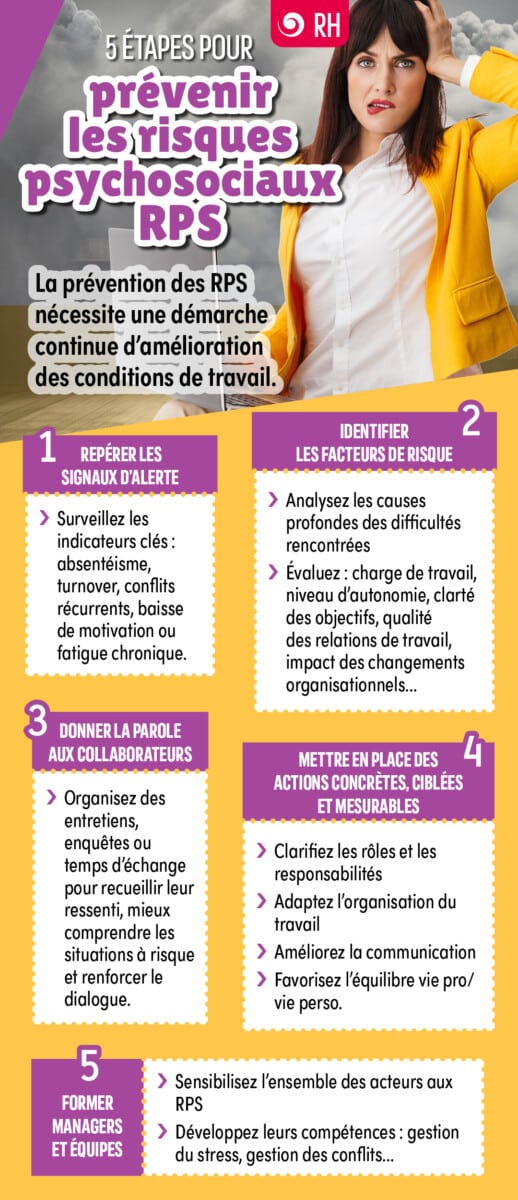
Psychosocial risks do not arise overnight. Often preceded by early warning signs, they can be anticipated through an appropriate prevention strategy. Here are five key steps to safeguarding staff wellbeing and fostering a healthy working environment.

The prevention of psychosocial risks requires a continuous process of improving working conditions. It is based on identifying high-risk situations and implementing appropriate measures.
1. Spot the warning signs
Keep an eye on key indicators: absenteeism, staff turnover, recurring conflicts, a drop in motivation or chronic fatigue.
«Psychosocial risks are not limited to crisis situations. They are often foreshadowed by changes in behaviour or a gradual deterioration in the working environment. The earlier these signs are detected, the more effective preventive measures will be.»
Nathalie, HR Director at a manufacturing SME with 120 employees
2. Identify risk factors
Analyse the root causes of the difficulties encountered.
Assess: workload, level of autonomy, clarity of objectives, quality of working relationships, impact of organisational changes…
[Also read] Psychosocial risks: from prevention to training
3. Giving staff a voice
Organise interviews, surveys or discussion sessions to gather their views, gain a better understanding of high-risk situations and foster dialogue.
«The best ideas for improvement often come from the front line. By regularly giving staff a voice, we can identify day-to-day challenges more quickly and take action before they affect team engagement.»
Claire, HR Director at an SME in the agri-food sector with 220 employees
4. Implement concrete, targeted and measurable actions
Clarify roles and responsibilities.
Adapt the way work is organised.
Improve communication.
Promote a healthy work-life balance.
5. Training managers and teams
Raise awareness of psychosocial risks amongst all stakeholders.
Develop their skills: stress management, conflict resolution…
Preventing psychosocial risks is everyone’s responsibility. A proactive approach helps to safeguard staff health whilst boosting collective performance.