Change has become a constant feature of the workplace, but it remains difficult for many employees to cope with. Fear, resistance, exhaustion… what if these reactions were perfectly normal? Understanding the mechanisms at play helps us adapt more effectively. So, how should we go about it? An analysis by Marie-Paule Seguin, a consultant, trainer and facilitator specialising in collective intelligence.

Organisations have never changed as much as they do today. Digital transformation, new ways of working, reorganisations, changing job roles… change within organisations has become a constant, and the ability to adapt to it has become an essential skill in professional life.
However, adapting to change at work remains difficult. According to a study by Oak Engage (2023), 39 % of employees say they are finding it difficult to cope with the changes taking place in their company and 40 % feel anxious when a change is announced.
But why do some people cope better with these career changes, whilst others find them a real struggle? The answer rarely lies in the change itself. Rather, it lies in the way in which each person perceives it, interprets it and reacts to it.
Understanding the mechanisms behind resistance to change enables us to adapt more effectively and navigate changes in the world of work with greater composure.
Understanding change: a question of perception
People react very differently to change. For some, it brings fatigue, uncertainty and fear. For others, it brings opportunity, renewal and hope. " »At last, things are going to get moving."
The change is neutral. What it is not, however, is how each person interprets it. Our reactions depend on our past experiences, our attitude to risk, our level of confidence and our working habits.
Example
«At a company I was working with, one employee remained silent during meetings about developments or new projects. His colleagues thought he was resisting change. One day, he finally explained what was going on for him: every change made him feel as though he was losing his bearings. He needed time to understand before he could get involved. His silence wasn’t a refusal. It was a way of protecting himself.»
Everyone sees a different reality
We often think that other people see things the same way we do. That is rarely the case. Everyone interprets reality through their own filters: personal history, culture, beliefs and professional experience. These factors have a profound influence on the way we understand a situation. Two people may experience the same event and draw completely different conclusions from it.
A very common example: the introduction of a new tool to a team
The manager sees this as an improvement that will make it easier to monitor operations and simplify certain tasks. A team member, on the other hand, may see it as yet another monitoring tool or as a loss of freedom in the way they work. As long as everyone remains stuck in their own interpretation of the situation, dialogue becomes difficult.
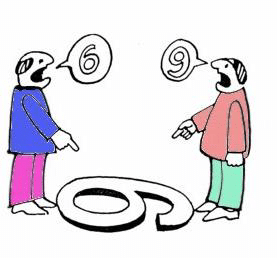
In this scenario, both people are right, but they are looking at the situation from different perspectives. It is impossible to convince the other person without listening to them to understand their point of view.
Give it a go: try a different perspective
A simple exercise can help you take a step back from a situation. Choose an incident at work that annoys or worries you. Then describe it without passing judgement, from several different perspectives:
- colleague
- your manager
- customer
- newcomer
- outside observer (child, competitor, trainee)
Don’t try to imagine the reactions. Just describe the situation.
Tip: In my training sessions, I often suggest finding eight different perspectives. The exercise never fails to surprise: it shows just how much our perception is just one interpretation amongst many.
The trap of implicit expectations
Another common source of tension when faced with change is what we expect… without saying so. We sometimes think that others should act as we would have done, understand our needs without us having to express them, and make decisions that are obvious. These expectations are legitimate, but they often remain unspoken.
Best practice
Start by asking yourself this question: «What exactly am I expecting in this situation?». Then: «Are these expectations realistic and achievable?», «Do I need to express them?»
Example
In a company in the midst of a relocation, one employee is strongly opposed to the new organisational structure. He feels ignored by his manager and speaks of a lack of consideration: «My boss knows full well what I need to do my job.».
In reality, he had very specific expectations: a quiet office, plenty of natural light and the proximity of a colleague. For his part, the manager had to deal with space constraints, team organisation and numerous trade-offs. He was simply unaware of these expectations. The tension did not stem from any ill will, but from a mismatch between unspoken expectations and decisions made without this information.
What is holding back adaptation?
An emotional reaction, above all else
In the face of change, The reaction is, first of all, emotional : fear, anger, frustration, sadness. These emotions are normal. They signal that a need is being affected: security, competence, professional identity, one’s place in the team. They are often expressed in the form of questions: «Will I manage to adapt?», «Will my role change?»
In many organisations, however, these emotions are rarely expressed. They are often perceived as a lack of professionalism or unjustified resistance. As a result, they are suppressed or concealed. But they do not disappear. They continue to influence things in the background.
Example: a change of software
When a department switches to a new business tool, the reaction is not limited to the tool itself. For some staff members, the old system represents years of mastery, recognised expertise and solid points of reference. Behind the phrase «The old system worked very well» often lies a deeper concern: having to start from scratch, or losing efficiency or legitimacy.
Identifying your emotions to cope better
Taking a few minutes to identify how you’re feeling often helps prevent tension from building up. Putting an emotion into words, even if only for yourself, helps you to take a step back. It also opens up the possibility of making clearer requests: training, time to learn, or explanations about the purpose of the change.
The right approach: recognising your emotions does not mean refusing to change. On the contrary, it often enables you to move from a defensive reaction to a more constructive approach.
Cognitive biases: invisible barriers to change
Beyond our emotions, the way we think can also hinder our ability to adapt. We interpret reality through mental shortcuts known as cognitive biases. These mechanisms are natural: they enable our brains to process information quickly. But when faced with change, they can sometimes distort our perception.
Confirmation bias
It leads us to focus on information that confirms what we already believe. If I am convinced that a project is going to go wrong, I will immediately notice the problems, the criticism or the difficulties, whilst downplaying the positive signs. In organisations, this phenomenon is often seen in informal conversations. An employee might say, for example: «You see, the new software’s crashed again – I knew it wouldn’t work.». The incident then becomes proof that the change is a mistake, even if other aspects are working correctly.
Loss aversion
It is one of the most powerful biases we face when dealing with change.
Research in behavioural psychology shows that we feel the loss more keenly than an equivalent gain. In other words, losing something we already have (a tool we’ve mastered, a familiar way of organising ourselves, an implicit status within the team) affects us more than the idea of gaining something new. Let’s take the example of an organisational change: even if the new structure promises greater efficiency, some staff members will initially focus on what they are losing: their points of reference, certain responsibilities, or their close relationship with a manager.
This bias explains why the benefits of a change are often less apparent at first than the perceived losses.
«All-or-nothing» thinking»
Some reactions to change are also based on a a cognitive distortion known as ‘all-or-nothing thinking’. In this type of reasoning, the situation is interpreted in very black-and-white terms: either the change is a total success or it is a complete failure. For example: «If this new project doesn’t work perfectly right from the start, it’s a bad one.»
Recognising this distortion enables us to adopt a more nuanced perspective: accepting that change may be flawed at the outset, yet still offering the potential for long-term improvement.
A real mental effort
These biases are also linked to a biological reality. The human brain is constantly seeking to save energy. Habits and routines help to automate many everyday tasks.
When change disrupts our routines
When a change occurs, these automatic responses are disrupted: we have to relearn, think more carefully and focus our attention more. This requires significant cognitive effort. That is why the first few weeks of a transformation can be particularly tiring.
A natural… resistance
Faced with this effort, our brain seeks to return to what is familiar. Resistance is therefore not always a conscious act of opposition. It may simply be a need to maintain one’s balance and energy.
Changing one’s perspective
Understanding these mechanisms often enables us to take a more nuanced view of our own reactions and those of others. Resisting change can give the impression that we are protecting ourselves. However, this approach can sometimes be more exhausting than the change itself.
Some studies show that 32 %: Employees facing frequent changes feel less productive and 48 % report feeling more stressed at work due to frequent changes.
Let’s take the example of Christiane, who is faced with the introduction of new time-tracking software at her company. She is immediately opposed to it. Her fears are legitimate: losing her routines, having to do without certain features, and being subject to greater scrutiny.
However, the decision has already been taken and the project is set to go ahead. By remaining in opposition, Christiane is devoting a great deal of energy to fighting a situation she cannot change.
Looking back, her needs are clear: to understand the purpose of the project, to be supported, and to receive training. It wasn’t a refusal to embrace change, but a lack of structure and support.
How to adapt better to change: 4 key steps
You can take action in four steps:
- Becoming aware
- Knowing how to communicate and listen
- Taking a step back to analyse the costs and benefits
- Acknowledging one’s share of responsibility
1. Awareness
The first step is an internal one. It involves understanding what is happening within ourselves and, in doing so, breaking out of an automatic reaction. When we react immediately to a situation – by shutting ourselves off, being critical or putting up resistance – we often act without having identified what is really going on for us.
This realisation may relate to several factors: our perceptual filters, our emotions, our expectations and our beliefs on the situation.
For example, a manager announces to their team the introduction of a new project management tool. One of the staff members reacts immediately: «This is going to make our work more complicated. I don’t have time to learn a new system.» At first glance, this looks like resistance. However, when he takes the time to think about it, this employee realises that his reaction is mainly driven by a concern: he fears he won’t be able to master the tool sufficiently and will appear less efficient in front of his colleagues.
This realisation changes everything. Instead of resisting, they can express a more specific need: to receive support or be given sufficient time to learn.
The change remains the same, but the way we position ourselves is changing.
A simple question can help you take a step back: «What is it that really bothers me about this situation? Is it the loss of a routine? The fear of not being up to the task? A lack of information? A feeling that I’m not being listened to?»
Recognising this enables us to move from reaction to action.
2. Communicate and listen more effectively
Much resistance to change does not stem from a refusal to adapt. It stems from a feeling of not being heard.
Active listening: a key driver
L'active listening is a valuable tool for overcoming these obstacles. It involves really listening in order to understand, by asking open-ended questions and paraphrasing what you have understood. This paraphrasing allows you to check that you are correctly interpreting what the other person is saying.
Read also : 5 tips for practising active listening
But listening is not always enough. To overcome obstacles, you also need to be able to express yourself clearly. That is where the feedback.
Feedback: a tool for making progress
Feedback involves describing a situation objectively, sharing your feelings and making a constructive request.
Read also : Feedback: a lever for successful management
For example, a new task management programme is rolled out within a team. One member of staff regularly expresses their frustration in meetings and criticises the new tool in front of their colleagues.
A typical reaction might be to say to him, «You’re always being negative about this project.» This remark is likely to be taken as an accusation.
A more constructive approach might be:
«At the last two meetings, you’ve voiced several criticisms of the new software in front of the team. When that happens, I get the impression that it becomes harder to make progress on the project and that some colleagues are reluctant to get involved. I’d like to understand what the issue is for you and see how we might find solutions together.»
In this example, the facts are described without judgement and the discussion is open. Feedback allows us to express what we observe and the effect it has, whilst leaving room for discussion.
Very often, Behind visible opposition lies a need which has not yet been articulated: a need for clarification, training, time or involvement in decision-making. Using tools such as DESC helps to prepare feedback and improve interpersonal communication.
D : Describe the facts
E : Expressing how you feel
S : Specify the requirement or expected behaviour
C : Concluding on the benefits
3. Take a step back
When we resist change, it is often because we feel as though we are losing something: a habit, a sense of comfort, or a sense of control.
Give it a go: the cost-benefit analysis
For take a step back, a simple exercise is to analyse the situation in terms of costs and benefits. The idea is to consider two possible options: to continue resisting or to try to adapt.
| Resisting change | Adapting to change | |
| Costs | fatigue, tension, stress, mental blocks | effort, discomfort, learning |
| Benefits | consistency, upholding one’s values, a sense of control | progress, fluidity, new skills |
How do you use it? Just ask yourself these questions:
To resist :
What does it cost me? What do I get out of it?
Adapting:
What does this involve for me? What’s in it for me?
An employee faced with a new way of organising work realises that resisting it gives her a sense of alignment with her values or the satisfaction of standing up for her point of view. But she may also find that this stance takes a lot out of her, creates tension with her colleagues and prevents her from moving forward with peace of mind.Conversely, adapting may require some initial effort on their part — learning new methods, stepping outside their comfort zone — but it will subsequently make their work run more smoothly or equip them with new skills.
This exercise is not intended to force people to accept change. It simply enables to look at the situation more objectively.
Sometimes, it also brings unexpected benefits. As they adapt to a new way of working, some people discover new ways of collaborating, new ideas or opportunities that were not apparent at first.
4. Acknowledging one’s share of responsibility
In a situation of change, no one bears sole responsibility. But everyone is responsible for how they react.
When we think that everything depends on others — on management, the organisation or our colleagues — we tend to feel powerless. This mindset often reinforces the feeling that we are merely at the mercy of circumstances.
Recognising one’s ability to make choices On the contrary, it enables us to rediscover a form of freedom.
When faced with a change, there are several options available:
- to oppose it outright (if important values are at stake)
- negotiate certain aspects
- suggest adjustments or improvements
- adapt gradually
The main thing is to to move from a passive stance to an active one.
Example
In a company, an employee discovers a new way of working. At first, he is convinced that it will make his day-to-day work more complicated. Then they realise that they were spending more time complaining than trying to understand. When they decide to actually give the new method a go, they discover that it can also save them time.
This kind of realisation often marks a turning point: change ceases to be merely an imposed constraint and becomes a situation in which one can take action.
Training to adapt better to change
Would you like to develop your ability to adapt in a practical way? The training course Adapting to change enables you to:
- understanding the mechanisms of resistance
- identify the impacts of change in the workplace
- develop adaptation strategies
- turning obstacles into drivers of efficiency
Change is now an integral part of everyday working life. But behind every organisational transformation lie profoundly human dynamics. Adapting to change does not mean simply enduring it. It means learning to observe what is happening to oneself, listening to others, and regaining the ability to take action in situations that are sometimes uncertain. Ultimately, the real question is not: «Why is change so difficult?», but rather: «How do we choose to experience it?»