CSR training is now recognised as an essential tool for addressing the growing environmental challenges and regulatory constraints. Companies can no longer simply raise awareness amongst their staff: they must now develop structured training programmes to bring about lasting change in their practices. During a round-table discussion organised by ORSYS, several key insights emerged regarding the central role of training in this transformation.
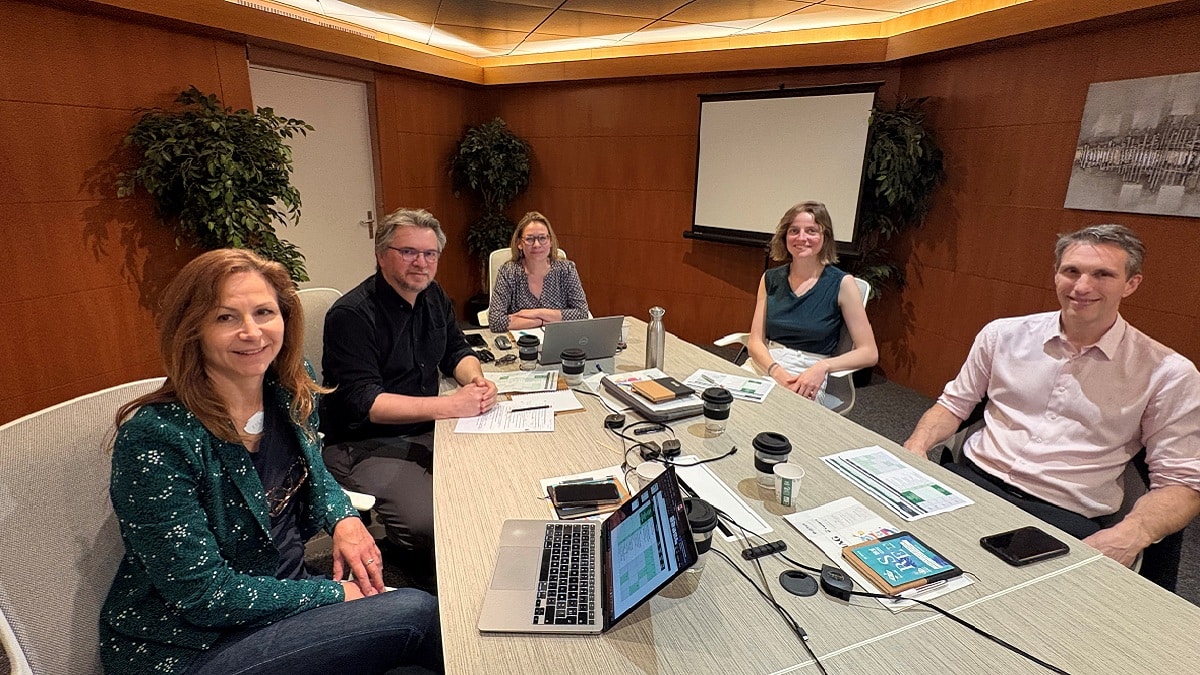
Initially limited to one-off communication or awareness-raising initiatives, CSR has entered a new phase: that of operational transformation. This development rests on one key driver: training. This was one of the key takeaways from the round-table discussion organised by ORSYS on 9 April on the theme: «From raising awareness to transformation: how does training accelerate organisations» CSR commitments?’.
This is a topic that raises many fundamental questions. Firstly, how do we move from raising awareness to bringing about real behavioural change? But also, what skills should be developed and which teaching methods should be prioritised? And, above all, how do we measure the impact? To address these questions, ORSYS has brought together a number of experts and practitioners with complementary perspectives: awareness-raising, instructional design, training and implementation within organisations. Gwénaëlle Dinspel, CSR Manager at ORSYS, chaired the debate.
A look back at the key takeaways from this discussion.
The participants
Presented by: Gwénaëlle Dinspel, CSR Manager at ORSYS
Julien Courbe, Head of Training at ORSYS
Martin Desbois, Head of Procurement at RTE
Mathilde Hébert, co-founder of Ma Petite Planète
Amandine Rovere, a consultant and trainer specialising in CSR
CSR: what is the definition?
Corporate social responsibility (CSR) refers to the voluntary integration by companies of environmental, social and ethical considerations into their activities and strategy. It aims to reconcile economic performance with a positive impact on society, by involving all of the company’s stakeholders: employees, customers, suppliers and local communities. This includes, for example, reducing its carbon footprint, ensuring the well-being of employees and adopting ethical practices with its partners. The aim is to act responsibly whilst maintaining a high level of performance.
From raising awareness to CSR transformation: a paradigm shift
CSR has undergone significant changes in recent years. From being a topic that was often treated as peripheral, it has become a strategic driver for organisations, notes Gwénaëlle Dinspel, before handing over to the participants. In their view, what are the most significant changes in terms of organisations’ commitment to CSR?
For Martin Desbois, responsible procurement expert at RTE, this transformation is driven by two key factors: «CSR is now a top priority, with senior management focusing on these issues» and procurement plays a key role, accounting for «75 to 80 % of the carbon footprint» in some organisations.
The same is true of’Amandine Rovere, a consultant and trainer specialising in CSR, which has observed a significant shift amongst SMEs: they are now seeking «practical, useful and effective CSR», with operational solutions that can be directly applied to their business.
This transformation is also cultural. As pointed out by Mathilde Hébert, co-founder of Ma Petite Planète : «We have moved from CSR that was little more than a showcase to CSR that represents a genuine investment.» As companies seek a return on investment from their CSR initiatives, it is now seen as a means of building resilience and adapting to the world of tomorrow.
A change that is also reflected in training practices. Julien Courbe, Head of the ORSYS Product Range, confirms: «Over the past 15 years, we have moved from raising awareness to developing CSR-related professional skills», with a growing focus on training in responsible procurement, the prevention of psychosocial risks, and issues relating to ethics and compliance.
From raising awareness to taking action: the role of engaging formats
The key question then becomes: how do we set the action in motion?
For Mathilde Hébert, the answer is clear: «Raising awareness and taking action go hand in hand.» The Ma Petite Planète challenge is part of this approach. Over a three-week period, participants gain practical experience: «they try out new practices and adopt new habits». The turning point comes from the fact that they are no longer passive but now take an active role in their own awareness-raising and training. The programme’s effectiveness also relies on impact assessment, to track changes in habits, and on repetition.
It is over time that behaviour really changes.
Structuring a CSR approach: the example of RTE
At RTE, the approach has developed gradually, driven by several factors: regulation, stakeholder expectations, and also impetus from senior management. As Martin Desbois explains: «Awareness-raising and training are not carried out in isolation, but are integrated into a overall strategy ".
This restructuring resulted in:
- the creation of a post dedicated to responsible procurement, which was soon doubled
- training for teams and specifiers
- the introduction of practical measures, such as «mandatory environmental criteria in all our tendering processes»
Training is understood in the broadest sense: this includes dedicated training programmes as well as support for procurement teams and specifiers. Training thus becomes the cornerstone of the CSR culture.
When awareness-raising is no longer enough: CSR training
The move towards training usually comes after an initial realisation.
According to Amandine Rovere: «The murals and workshops help to raise awareness.» Before long, staff want to take things further. They realise that CSR: «is not a secondary issue […] but a profound organisational change». The light bulb moment comes when they make the connection with their job. That is when demand for training really picks up.
For example, an SME in the digital sector was initially not particularly concerned about CSR. However, faced with the requirements of its financial partners, it had to reorganise its structure and train its staff in responsible digital practices.
[To remember]
1. Driven by senior management, CSR is becoming a strategic lever, a key factor in performance and transformation, with procurement playing a key role and a requirement for tangible results.
2. Taking action is key: experimentation and repetition help to embed behaviours in the long term.
3. CSR is integrated into the various business lines through training programmes, supporting a comprehensive and operational approach.
CSR training: a key driver for organisational change in businesses
This trend has also been reflected in the range of CSR training courses on offer, points out Gwénaëlle Dinspel.
CSR training: teaching methods undergoing a major transformation
«Yes,» confirms Julien Courbe, «CSR training programmes have changed significantly in recent years. Initially, they were mainly aimed at senior managers, with a »strategic’ focus and delivered in a ‘seminar’ format. Today, they are becoming…” much more operational.
«We have moved on from raising awareness to a more practical approach with the development of hybrid formats, combining murals, workshops and role-play exercises.»
Today:
- the murals are no longer isolated
- they form part of study programmes
- with workshops and practical sessions
This is a view shared by Amandine Rovere: «I now run action-oriented training courses.» The two-day courses are very hands-on: participants ask highly practical questions and leave with practical solutions.
Technical challenges… but complex to implement
In practice, skills development remains a challenge, particularly in procurement. As Martin Desbois explains, the main difficulty is to translate CSR issues into highly technical contexts : «transformers, cables […] in very large quantities». Incorporating criteria such as carbon footprint is complex. The risk is that we end up «comparing things that are not comparable».
The solution? Structuring practices: «providing a methodological framework», with reliable and verifiable indicators.
Even today, he explains, «we provide a great deal of support» and the teams are gradually becoming more independent. «More and more buyers are getting to grips with these issues.»
The process is therefore a gradual one: it is still largely supported by external guidance, but is in the process of being structured and taken on board by the teams.
Soft skills: just as strategic a tool as technical skills
Whilst technical skills are essential, they are not enough.
According to Amandine Rovere, The success of a CSR initiative also depends on people : «You need to be able to get others on board and, therefore, to connect with people.» This means:
Listen to
Empathy
Leadership
And, above all, the ability to supporting change over the long term and a form of resilience. Indeed, CSR professionals are faced with a stop-and-go process in which setbacks are inevitable. Recognising this is the first step. The second is to adopt a firm and confident approach in order to maintain momentum.
«Soft skills are very important. For this to work, we need experienced, well-regarded, resilient and optimistic managers. That’s a lot to ask of CSR managers, but I believe it’s essential.»
Tailoring CSR training formats to suit a variety of profiles
Gwénaëlle Dinspel highlights the diversity of audiences, professions and levels of understanding when it comes to CSR issues. How are training formats adapted to this?
«The provision has undergone a major transformation to adapt to this diversity,» replies Julien Courbe. Today, the schemes are organised to several levels, depending on the profiles. For senior executives, the formats remain geared towards taking a step back, with a focus on seminars and strategic discussions. Conversely, for managers and operational staff, the approach is much more practical: practical training, role-play exercises, hands-on experience.
The aim is clear: to embed CSR in the realities of business operations.
Another major development is the structuring of the offer. It is no longer organised solely by theme, but by need and profile. With this in mind, full courses emerging, such as the CSR Academy which combines training courses and resources (news articles, webinars, etc.).
As Julien Courbe puts it, «The first level helps you understand the issues at stake. The second is much more focused: CSR in my line of work, CSR in my day-to-day practices.».
Play as a means of fostering collective engagement
In this context, characterised by diversity, interactive formats are becoming increasingly prevalent.
For Mathilde Hébert, it is even a key driver: «We’ve been supporting businesses of all sizes and across all sectors for six years.» One of the major challenges is the varying levels of awareness within organisations. The game helps to bridge these gaps.
«This is a very serious subject, and sometimes you need to approach it in a slightly roundabout way. A light-hearted approach makes it possible to speak to everyone, moving away from top-down formats.»
This is because CSR is sometimes still seen as a burden: it can trigger «quite a lot of negative emotions». The game «helps to ease feelings of guilt and talk about it in a different way».
Participants:
- play together
- take action
- help one another
And all this without judgement.
This collective momentum is essential. The wider the participation, the greater the impact across the organisation.
The device also produces measurable effects :
- reduction in greenhouse gas emissions
- resource savings
- employee engagement
Another benefit: identify internal contacts, that is to say, «people who want to continue to get involved». Because «CSR isn’t just about CSR managers»: the transformation must involve everyone.
Finally, at Ma Petite Planète, there is something new this year : whilst the basic format is standard, it can be expanded as required, or even tailored to each company through a Level 2. Whilst retaining the fun aspect, this makes it possible to work on specific topics or business issues to take the corporate CSR strategy.
Combining formats to meet all needs
Given such widely varying levels of maturity, should we introduce more formats? asks Gwénaëlle Dinspel.
For Amandine Rovere, the answer is clear: «Yes, a variety of formats is essential.» Workshops, in particular, play a key role: «They enable us to break down silos »… and to involve the whole organisation.".
Because a CSR transformation can only succeed if All levels are making progress:
- direction
- management
- operational
«For CSR to move forward, we need everyone’s input. This transformation cannot be driven by just a handful of experts. On the contrary, a diversity of perspectives is a valuable asset: it is what enables concrete solutions to emerge.»
The trainer shares an eye-opening experience: in a company that was initially rather unenthusiastic, a fun workshop proved to be a turning point. The result: «they came out with a smile on their faces», even though they had been reluctant at the start. These formats also have the advantage of to appeal to different types of people: some respond to emotion, others to data or facts. So, «depending on the live experience we create, we reach each person at some point».
Finally, these workshops play a key role in the long term. They make it possible to reignite momentum when engagement drops : «I use them when I feel my motivation waning.».
[To remember]
- Tailoring CSR training formats to participants’ profiles and needs
- Combining awareness-raising and training
- Using fun formats to engage
- Maintaining momentum over time
A variety of formats is essential to the success of the CSR transformation.
From CSR training to sustainable transformation
Gwénaëlle Dinspel begins by exploring a key issue: how do we move from training to lasting transformation? Beyond the skills acquired, what is the real impact on individuals and organisations? And how can we maintain this momentum over time?
The impact of CSR training: beyond skills
CSR training does not merely transform practices, it also affects individuals. In particular, it enables us to move beyond certain reactions:
Denial
Anger
Anxiety
As Amandine Rovere explains: «Everyone goes through certain stages: denial, anger, sadness, acceptance and action.» Understanding these processes enables us to better support people through change.
When we help teams to better understand what they are going through, it gives them a frame of reference and makes it easier for them to take action.
Measuring the impact of CSR initiatives
At RTE, impact is measured through concrete indicators, explains Martin Desbois. This makes the visible results.
For example:
- % procurement incorporating CSR criteria
- volume of responsible procurement carried out with committed stakeholders (adapted enterprises, etc.)
- % of consultations incorporating environmental criteria
How can you avoid the «one-shot» effect?
Once staff have been made aware of the issue and trained, how can we ensure that their commitment lasts over time?
Faced with this main risk of running out of steam, «the solution is consistency,» emphasises Mathilde Hébert. This involves regular activities, such as challenges.
Training, ", the training programmes must be progressive," adds Julien Courbe.
Example of structuring over time :
- initial awareness-raising phase
- development of professional skills
- sustainable ownership
There is no quick fix; transformation takes time.
Another possibility: appoint «CSR ambassadors», on a voluntary basis. For Martin Desbois, internal networks do indeed play a key role. «We have at least one contact in every department.»
The role of ambassadors:
- highlight issues and best practices
- pass on initiatives
- exchange
- embed the approach in day-to-day practice
However, to remain dynamic, these networks need to evolve. Amandine Rovere recommends «rotating the ambassadors». This helps to bring in fresh ideas and prevent burnout, both individually and collectively.
Beyond the measures, the concrete projects are also powerful accelerators.
Martin Desbois gives an example: the manufacture of cables from recycled materials. The result: «people who are incredibly proud», committed teams and a strong sense of collective spirit.
By fostering connections, these projects have a lasting knock-on effect.
[To remember]
Through these discussions, a number of avenues have therefore emerged for ensuring CSR is a long-term commitment :
working on skills and emotions
create a recurring pattern
to organise ambassador networks
draw on specific projects
Transformation depends as much on people as it does on the organisation.
In conclusion, here are four key tips for a successful CSR transformation
Combining ambition with realism
«You have to believe in it and dream big» but «remain sufficiently practical and pragmatic», taking into account the operational constraints faced by businesses and individuals. Mathilde Hébert also advocates leading by example: demonstrate through concrete actions that change is possible.
Embracing a mindset of continuous progress
Martin Desbois believes we need to move forward gradually. «It’s better to do something imperfect than to do nothing at all,» he advises. In technically demanding environments, the temptation to wait for a perfect solution can be strong. But that holds things up. Be pragmatic: take it one step at a time, the key is to ensure that the transformation takes place over time.
Reinforce learning straight away
Amandine Rovere, for her part, emphasises the importance of taking swift action following the training: «ideally within the following weeks». To this end, set yourself some simple and achievable goals : «Five to ten indicators are enough.».
Building trust through CSR training
Trust is an often underestimated driver, Julien Courbe points out. Feedback from learners shows that the training helps to develop «genuine confidence in one’s ability to take action». This feeling is crucial for taking action and making a long-term commitment to CSR initiatives. So, Get training!
Ultimately, despite differing profiles and contexts, the initiatives converge. To round off these discussions, Gwénaëlle Dinspel emphasises how the approaches complement one another: there is no single solution, but rather a range of levers to be activated. CSR transformation is a long-term process. We must therefore continue with the initiatives already underway, combining training, awareness-raising and concrete actions.
You can also watch the video to see the key messages highlighted by the panellists at the end of the round-table discussion: