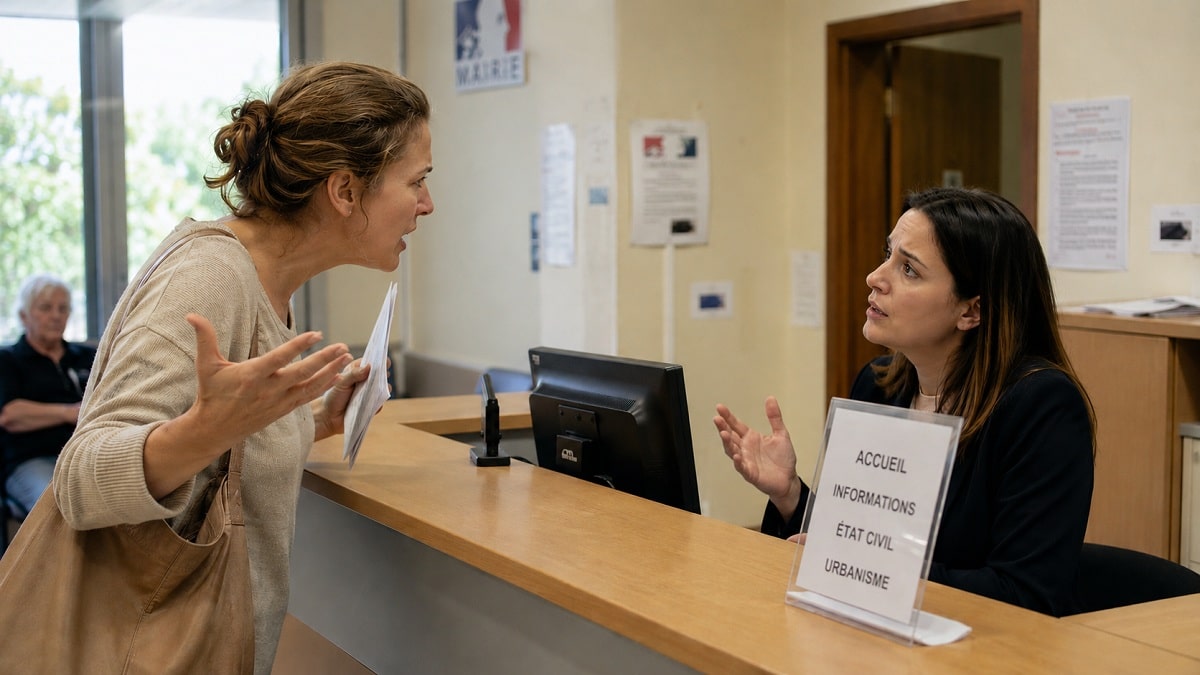
Incivility undermines harmonious coexistence and fuels a sense of insecurity. It particularly affects the public sector and represents a major challenge in relations between service users and the administration. Being able to identify such behaviour in order to implement appropriate measures is essential for easing tensions and protecting the public service. Insights from Laurence Rochette, a consultant and mediator specialising in the public interest.
Incivility: a lack of civility and politeness
Anti-social behaviour: what is the definition?
There is no general, self-contained legal definition of «incivility», even though the term does appear in certain pieces of legislation or parliamentary documents.
In particular, the Equal Opportunities Act of 31 March 2006 contains a Title IV devoted to «combating anti-social behaviour». And, according to a opinion issued during the parliamentary scrutiny of the bill, «incivility refers to disorderly conduct and misconduct which, whilst not expressly covered by the Criminal Code, constitute breaches of the basic rules of social behaviour : »noise nuisance, vandalism, lack of respect".
These are therefore behaviours that run counter to the generally accepted social norms that make life in society possible.
A multifaceted concept
Some examples of anti-social behaviour:
| Offences against the person | |
| Verbal | Contempt, insults, disparagement, mockery, using the informal ‘you’ |
| Behavioural | Lack of courtesy, smoking, using mobile phones, jumping the queue, noise nuisance |
| Physics | Blows, injuries, shoving |
| Damage to property | |
| Vandalism | Graffiti, fly-tipping, dog fouling |
| Flights | Fraud, metal theft |
Anti-social behaviour therefore encompasses a range of behaviours, each of which is dealt with separately under specific offences (minor offences, criminal offences, etc.), each defined by a statutory provision (the principle of legality).
It is therefore not acts of incivility that are penalised, but specific offences. For example: damage to property falls under Article 322-1 of the Criminal Code, whilst insults constituting public abuse fall under the 1881 Act. Depending on the severity of the offence, the judge may impose fines, prison sentences or community service.
It is also the case that acts of incivility do not constitute a punishable offence, even if the behaviour is deemed rude or disruptive. On the other hand, acts of incivility can become offences if they cross a certain threshold: the line is therefore based on the facts and the context.
| Examples of anti-social behaviour that is not penalised (in itself) | But be careful: some of them can quickly cross the line into illegality |
| Cutting in front of someone in a queue (without using violence or threats) | Jostling → minor violence |
| Speaking loudly in a public place (without causing a disturbance) | Noisy behaviour at night → night-time disturbance |
| Showing a general lack of respect (not saying hello, being rude) | Offensive remarks not backed up by facts → abuse |
| To slam the door on your way out (without causing any damage) | Slamming the door violently (resulting in a broken handle or window) → minor damage to property |
The players involved
The characteristics of anti-social behaviour
Not organised on a social basis
Visible in public spaces
Rarely serious
Lead to a state of disorder
Not very strictly enforced
Last a long time
Key figures: the difficulty of quantifying anti-social behaviour
Without a clear definition, it is difficult to quantify acts of anti-social behaviour accurately. The indicators are therefore indirect: police statistics, victimisation surveys and local data. These sources are imperfect as they depend on reports, police activity and subjective perceptions. There are therefore significant biases (under-reporting, local variations, and the influence of subjective perceptions). Despite this, cross-referencing these data makes it possible to identify trends that can help guide public policy.
So, to mark the launch of the plan to protect public servants in 2023, the authorities had emphasised that «reports of isolated incidents of anti-social behaviour and violence by users are rising sharply. In 2021, some 35,000 healthcare professionals were attacked; the family allowance funds (CAF) recorded 12,000 acts of anti-social behaviour in 2022, and Pôle Emploi noted a a 20% increase in violence in Q3 between 2020 and 2023. Front-line counter staff are the first to be exposed.
Testimonial from a receptionist at a town hall
«I’ve been working at the town hall reception for 20 years. Dissatisfied members of the public are becoming increasingly aggressive. The return to normal life after the pandemic has been particularly difficult. We used to really feel that “everything, right now” attitude, but since then it’s got worse. Now, when I’m dealing with a member of the public, I don’t leave anything lying around on my desk. I put away the stapler, the phone, the pen… I remember the time a member of the public threw a pencil holder at my face because it had taken three months to issue his passport.»
Incitement to disorderly conduct that undermines the relationship between the public and the authorities
Rudeness in the public sector stems from an asymmetrical relationship between the public and the administration: excessively long waiting times for procedures that are too complicated.
The causes
Public services that are difficult to access
Whilst «82 % of administrative procedures are now carried out online», «almost one in two French people (44 %) encounter difficulties when carrying out administrative procedures online». This is highlighted in a report by the Senate committee «Making public services more accessible: restoring trust between public authorities and the public» (September 2025). The report also highlights a sense of «dehumanisation» among users who are «lost in front of their screens». This is borne out by accounts from elected representatives in rural areas, who speak of a «sense of abandonment» which they attribute to the ’steady erosion of local public services«.
Decline in the number of physical service points
A deteriorating social environment
This is despite a growing right to use public services, underpinned in particular by:
- the establishment of the Ombudsman of the Republic in 1973, which became the Defender of Rights in 2011 (handling disputes between members of the public and the administration)
- the enshrinement of the right to make mistakes in the Act of 10 August 2018, known as the ESSOC Act («for a State serving a society based on trust»)
The service counter therefore remains a frontline where bureaucracy – which holds a monopoly on the enforcement of the law – meets the service user, who is now more aware of their rights.
The individual and collective consequences of anti-social behaviour
Humanities
– Demotivation and demobilisation of teams
– Increased absenteeism
– Fall in productivity
– Psychosocial risks and their impact on mental health at work
Operational
– Disruption or slowdown in the continuity of public services
– Train delays
– Failure to treat a patient
Financial
– Cleaning of buildings
– Replacement of equipment
– Setting up monitoring teams
– Loss of revenue due to fraud
For example: anti-social behaviour on public transport costs one billion euros a year (Mobility Observatory 2021).
An obligation on the part of the employer to achieve a specific result, and rights for staff
An obligation to achieve a specific result
In the civil service, decrees relating to health and safety refer to the provisions of Book I of Part Four of the Labour Code, including, in particular, the general duty of prevention laid down in Article L. 4121-1. According to this article, «the employer shall take the necessary measures to ensure the safety and protect the physical and mental health of workers». This implies a healthy and safe working environment. It is therefore not merely a matter of putting measures in place, but also of achieving the desired outcome, namely the prevention of harm to staff’s physical and mental health.
Testimonial from a public-sector employer
«We have had panic buttons installed at our various service centres (CCAS, swimming pool, health centre, etc.) to protect staff from attacks by service users. We are the only health centre in our area. Sometimes reception staff receive threats because appointments are only available at a later date. There is a six-month waiting list for an appointment with a GP. Service users are angry…»
Staff rights
In practical terms, when faced with anti-social behaviour, officers have the following at their disposal:
- the right to occupational protection, extended to their dependants
- the right to withdraw from work in the event of a serious and imminent danger
Testimonial from a pool manager at a municipal swimming pool
«During the summer of 2025, we had to exercise our right to withdraw from work in the face of verbal and physical abuse from certain swimmers. The swimming pool was closed for three days. In fact, we felt completely overwhelmed by groups of uncontrollable individuals. We were very frightened.»
What strategy should be adopted to tackle anti-social behaviour?
Prevention
Training
Action
1/ Prevent
The first pillar of this strategy is prevention, with a twofold focus on raising awareness and providing education. Indeed, putting things into words helps us to see and understand them. This is the aim of the communication campaigns designed to raise awareness amongst users.
For example: the RATP’s initiative, launched in 2024 and named «In real life, not everyone likes it», tackles everyday anti-social behaviour on public transport.
2/ Train
Training means, first and foremost, making it clear to staff what procedures they should follow to report incivility:
- What should we warn people about?
- How do I raise the alarm?
- Who should I alert?
- What action should be taken?
The training should also enable staff to develop specific skills:
- identify the early signs
- defuse
- to express one’s disagreement
- apply the techniques of non-violent communication and conflict resolution
Another key skill to develop is learning how to cope with the aftermath of a conflict (knowing how to relax in order to look after your mental health).
[Training] Prevention and management of incivility in the public sector
Key points of the training course:
Understanding the mechanisms that lead to aggressive behaviour
Using emotional intelligence through the «right» approach
De-escalating aggressive situations, managing tensions
Understanding techniques for anticipating, identifying and dealing with situations
Managing conflict and adapting your communication style
Examples of practical exercises: analysis of real-life situations, role-plays, etc.
3/ Taking action
Finally, this involves, in particular, the introduction of specific procedures and tools, whether to make the most of new technologies or to take action on at local level.
For example: the City of Paris has a «DansMaRue» mobile app» which enables users to identify and geolocate anti-social behaviour and track the progress of their report. Designed for members of the public, the tool is also useful for city officials (municipal police officers, neighbourhood managers, road maintenance or cleaning staff), who can use it to report issues that fall outside their remit (for handling by specialist teams) or that they are unable to deal with immediately.
Testimonial from a director-general of services in a town with a population of 15,000
«When an officer identifies an act of incivility, the mayor systematically meets with the member of the public concerned. In a constructive manner, he reminds them of their obligations to behave courteously in order to ensure an efficient public service. If the incivility continues, the user is notified by post that they will henceforth have to make an appointment with the relevant department to submit a request. In the year since this was introduced, we have already been able to curb some instances of aggressive behaviour.»
Key takeaways: 5 essential points
1 – Incivility refers to breaches of the rules of social behaviour, which are not always punishable by law.
2 – They are on the rise, particularly in the hospitality sector.
3 – They reflect a strained relationship between users and the administration.
4 – Their impacts are human, organisational and financial.
5 – The response is based on three key areas: prevention, training and action.
To conclude, acts of incivility are neither trivial nor inevitable: they reflect tensions that can be prevented and managed. By combining a legal framework, staff training and practical measures, public organisations can restore harmonious relations with service users. But beyond these measures, it is a shared culture of respect that needs to be rebuilt. What if everyone took an active role in promoting civic-minded behaviour in their daily lives?